Olive Business Community.
B2B PROCUREMENT & VERIFIED TRADE NETWORK · New Greenfield Project (2026) · LEAD PRODUCT DESIGNER & FRONTEND ARCHITECT

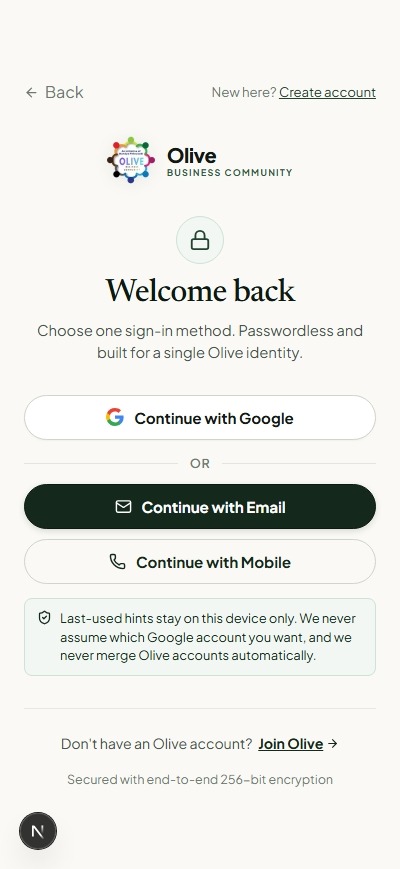

The problem.
Diocesan commercial requirements (from ₹10L to ₹2.5+ Cr) were executed through unstructured WhatsApp groups and informal word-of-mouth, resulting in opaque tender scopes, bidder anxiety, and zero institutional verification.
Diocesan commerce suffered from the 'Informal Trust Paradox': members strongly preferred transacting within their trusted community, but informal channels created operational chaos and high transaction friction.
The Anxiety of Opaque Budgets
Early UI iterations showcased massive gold budget banners ('₹1.25 Cr'). Usability testing revealed this repelled quality technical contractors: enterprise tenders often have flexible, milestone-based, or open budgets, and prominent financial figures caused anxiety and attracted low-ball price-cutters rather than quality engineering partners.
The Lead Leakage Problem
Without a structured procurement feed, enterprise procurement leads expired silently in chat threads. Subcontractors had no way to discover active commercial tenders matching their specific license category.
Trust & Verification Deficit
Buyers feared unsolicited spam and unvetted subcontractors, while qualified contractors hesitated to invest hours preparing RFP proposals without verified assurance of the buyer's legitimacy.
Crafting for clarity.
Architected and engineered the complete frontend featuring a spec-first 2x2 technical tender matrix, dual-layer public discovery with protected bidding, diocesan accreditation badges, and an administrative governance suite.
User Research & Insights
Conducted contextual discovery with 14 diocesan business executives and commercial contractors. Analyzed 40+ legacy tender documents to understand decision factors: timeline urgency, technical scope, location, and entity credibility consistently ranked higher than raw budget figures.
Design Principles
- •Spec-First Information Hierarchy: Elevate engineering requirements and timelines over vanity budget numbers.
- •Engineering Efficiency: Scaffold requirement schemas and test responsive layout boundaries systematically.
- •Dual-Layer Public/Private Discovery: Allow public discovery of technical specifications while securing bidder identity and contact credentials.
- •Institutional Dignity in Aesthetics: Balance SaaS polish with deep heritage cues (editorial Newsreader serif, forest olive, warm champagne accents).
The Pivot from 'Budget Hero' to '2x2 Technical Specifications'
Decision 01Early card designs showcased large gold budget banners ('₹1.25 Cr'). Usability testing revealed this alienated RFPs with confidential or negotiable budgets, causing buyers to receive price-only bids rather than quality engineering proposals.
Chosen Solution:Demoted budget to an optional, quiet metadata cell and replaced the layout with a balanced 2x2 grid (Location, Required By, Enterprise Tier, Budget Scope). Increased description preview to 3 lines.
Considered a prominent range slider with minimum bid estimates, but enterprise contractors confirmed it still forced premature price anchoring.
Observed Impact:Contractors reported reviewing technical documents before checking price terms.
Dual-Layer Public Discovery with Protected Bidding
Decision 02A complete login paywall killed organic discovery and search indexing, but fully open contacts invited unvetted vendor spam.
Chosen Solution:Engineered a progressive disclosure model: all commercial scopes, deadlines, and technical documents are 100% public to build network gravity; proposal submission and buyer contact details require verified Olive authentication.
Considered requiring email verification on first click, but it introduced high bounce rates during testing.
Observed Impact:Maintained complete public search indexability while preventing unverified buyer contact spam.
Diocesan Trust Badge & Verification Hierarchy
Decision 03Generic 'verified' badges lacked meaning in a community bound by diocesan and parish relationships.
Chosen Solution:Implemented an institutional verification pill combining diocese endorsement, parish origin, and enterprise membership tier (Patron / Enterprise / Member).
Considered a 5-star peer rating system, but community elders rejected it as inappropriate for institutional commerce.
Observed Impact:Clear institutional endorsement without subjective peer rating disputes.
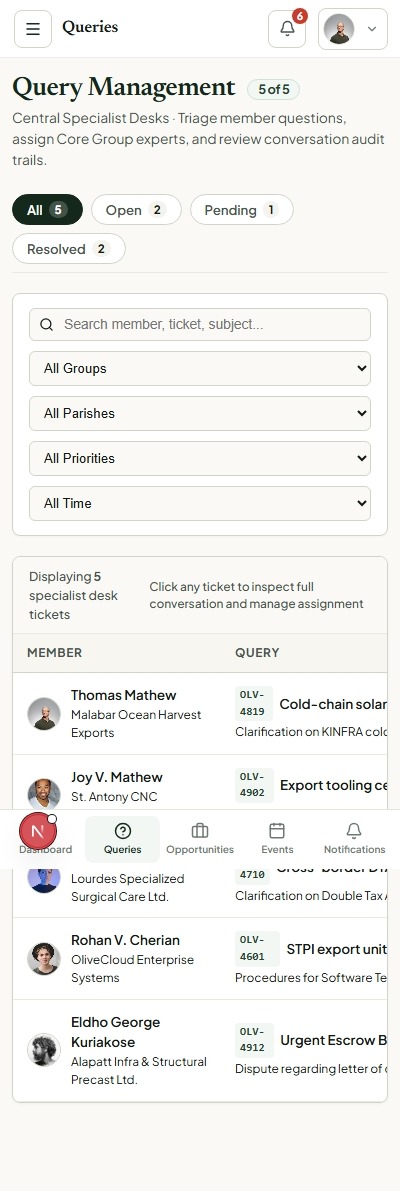
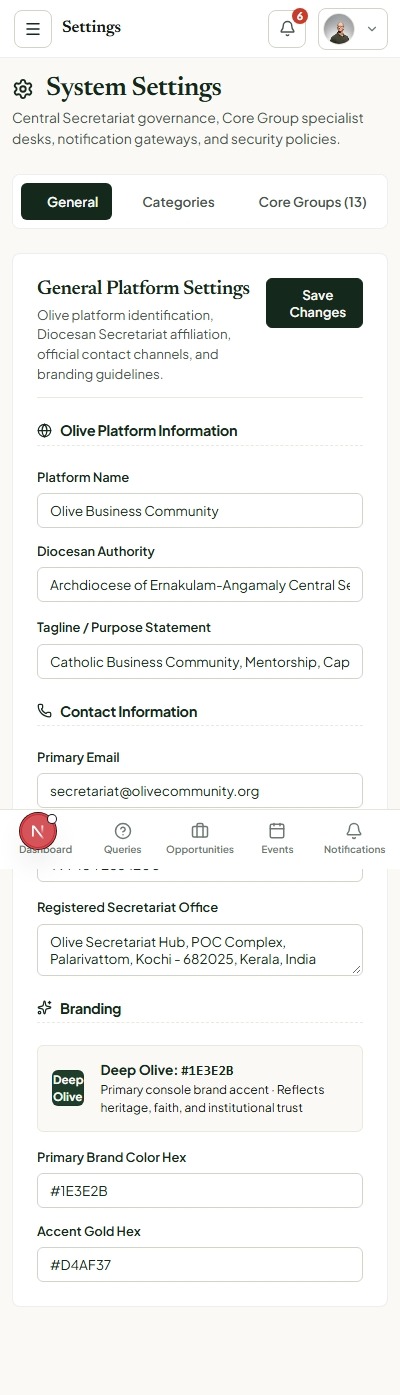
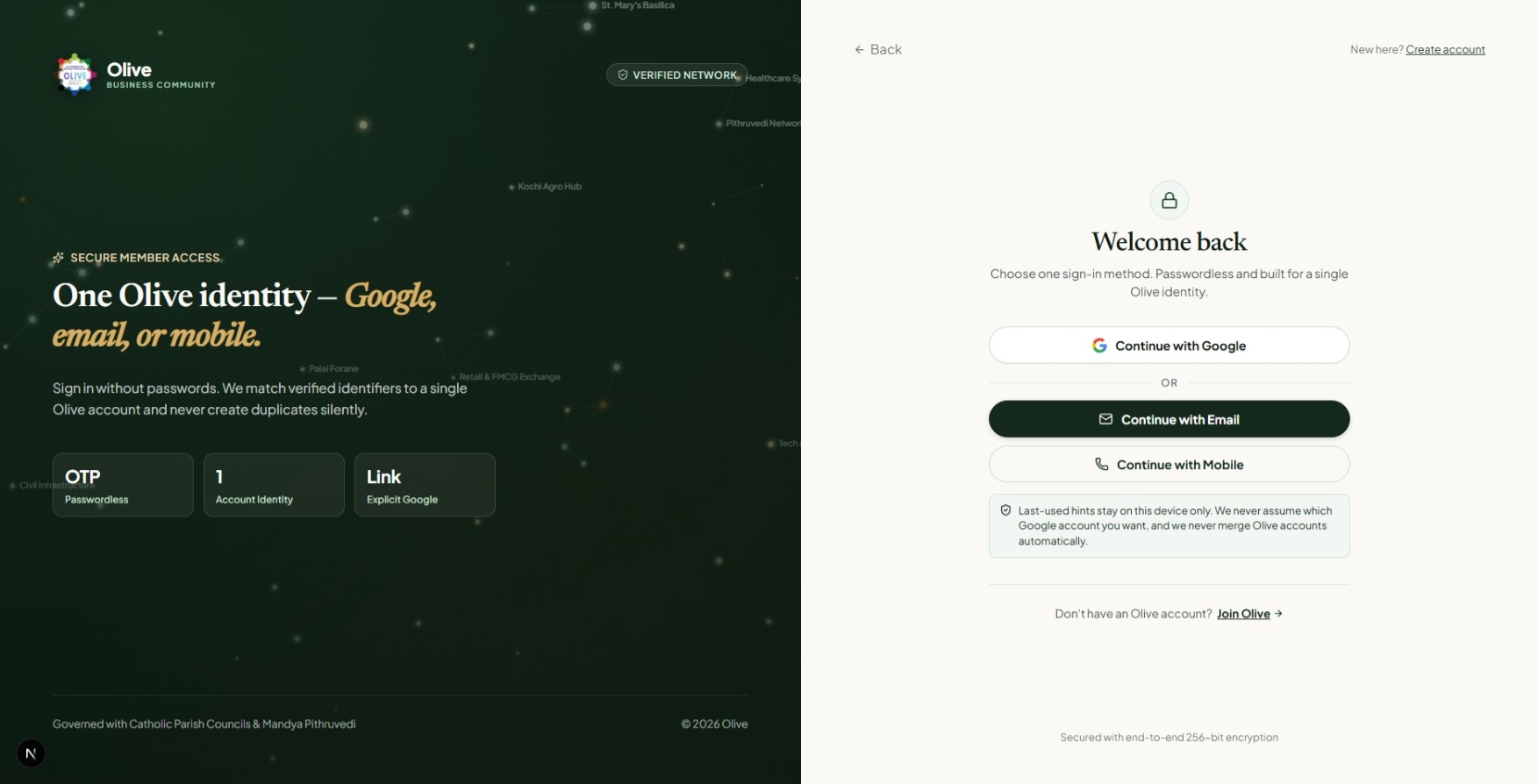
Interface flows.
End-to-end operational flows architected for minimum error rates and predictable human execution.

Design and roll out.
Engineered a premier B2B ecosystem that formalized multi-crore diocesan trade with clear craft and technical precision.
Olive Community successfully migrated informal community transactions into a modern, transparent procurement pipeline. Developing the complete front-end with structured components enabled immediate backend integration.
Olive Heritage & Enterprise Design System
An institutional design system designed for 1440px desktop baseline, AA contrast compliance, responsive touch targets, and resilient SSR.
What I'd Do Differently
“In the first iteration, we underestimated how many commercial projects operate with milestone-based or completely open budgets. Designing around rigid numerical budgets was our biggest early mistake. Pivoting to a flexible, spec-first information hierarchy taught me that in B2B enterprise software, technical clarity and timeline feasibility matter far more than upfront price tags.”